Wednesday, July 12, 2023

7 types of rest

 Here are the seven types of rest:


🛏 Physical rest: This type of rest helps your body recover from strenuous activities. Some examples of physical rest include napping, relaxing, sleeping, and even massages or yoga.

🧠 Mental rest: Rest for your mind is important, especially for those who experience racing thoughts or have trouble sleeping. Taking breaks, journaling, or other types of mental health self-care will allow you to mentally rest.

🤯 Emotional rest: To emotionally rest is to allow yourself to be real and authentic with others as well as yourself. Emotional rest gives you the time and space to feel your feelings and openly express them.

👃👂 Sensory rest: Everywhere we look there is some type of sensory stimulation like TVs, phone screens, bright lights, and music. Sometimes we need rest, a break, and time to ourselves from all the outside stimuli that may overwhelm our senses.

🎨 Creative rest: For our creative minds out there, this rest is for you! To achieve creative rest is to take the pressure “to do” off of yourself. Creative rest can look like taking a step back from projects or problem solving and sitting in nature to appreciate what you see around you.

👪 Social rest: This type of rest requires you to understand how you function around others. Do you gain energy from social interactions or do they drain you? Realizing your needs in social settings can help you make decisions about how frequently and for how long you spend in crowds or other social settings. This doesn’t necessarily mean you have to separate yourself from others, but more so being more deliberate in how and when you spend your time.

🕊️🧘 Spiritual rest: Spiritual rest relates to our connection and relationship with something deeper and greater than ourselves. This rest can look like intentional time in meditation, prayer, community building, or other practices that give us life.

What type of rest do you need today?

Thursday, February 16, 2023

Saturday, September 3, 2022

Thursday, August 25, 2022

Saturday, August 20, 2022

Saturday, July 30, 2022

14 Triggers causing a Fibro Flare


14 'Triggers' That Can Cause a Fibromyalgia Flare

Editor's Note

Any medical information included is based on a personal experience. For questions or concerns regarding health, please consult a doctor or medical professional.

Some days it may feel like your fibromyalgia is totally unpredictable – like anything or everything could set off a massive flare at any given moment.

But if you’ve been living with the condition for a while, you may have noticed certain patterns or trends in your flares. Maybe you always get hit with intense pain on the days the temperature spikes, or perhaps certain foods or activities tend to ramp up your fatigue and other symptoms. Over time, becoming familiar with your fibromyalgia “triggers” may help you reduce your number of flare-ups. (Of course, some factors are easier to control than others. If only you could have power over the weather!)

For those who may be newly diagnosed or are still trying to understand their fibro better, we asked our Mighty community to share the “triggers” they’ve discovered that cause their fibro to flare. Everyone is different, so not everyone with fibromyalgia will have the same triggers (some may not even have any at all!), but if you’re wondering what types of things can set off others’ flare-ups, this might be a good place to start. And if you can relate to any of the following, know you are not alone.

Here’s what our community shared with us:

1. Heat

Heat is one of the main causes. I hate summer because of this. It makes me dizzy and really sick and can trigger a general flare-up. I also get heat exhaustion and dehydration really easily.” – Cate N.

My biggest trigger is heat. Summertime is the worst for me. I walk outside in this Georgia heat and it’s like insta-pain.” – Jennifer B.

Heat. Showers, weather, etc. If I can stay in a cool environment it helps. My AC is on May-October with tons of fans on. In the winter, my furnace gets lonely.” – Amy R.

2. Sensory Overload

“Going to places that overstimulate my senses with noise, smells, lights, people, etc. trigger a fibromyalgia flare-up.” – Kristal K.

Sensory overload – multiple people talking at the same time and crowded spaces. This usually ends up causing an exacerbation in my symptoms, especially if I’m without a friend or my husband.” – Jamie H. 

“Things like going to the supermarket or hospital appointments don’t help. Loud noises, crowds, bright lights, etc. leave me feeling disoriented and fatigued.” – Sophie R.

3. Specific Colors

The color red. It causes me to go blind temporarily, have a headache to the point where it makes me want to throw up. I have to avoid it a lot. While others thinks it’s funny as hell [and say], ‘oh, just don’t look at it.’ When it could be an important message. Even in video games I have to avoid seeing it when others in my home play. It’s frustrating [when] people [are] so insensitive.” – Miriam J.

4. Rain or Humidity

Rainy weather. Makes my back muscles feel like they’re being peeled slowly from the bone. Makes my whole body throb down into the bone. Wipes me out completely.” – Diana P.

The weather, I can sometimes predict the rain! When there’s no other explanation for a flare. Humidity, air pressure changes. I’ll get headaches and my joint areas will swell more than ever! The pain ramps right up.” – Rebecca M.

5. Emotional Stress

When I get bad news I always get a flare-up. When I’m going through some really bad times in my life I experience severe flare-ups!” – Debbie G.

Any sudden stressful event. I can normally handle finals week alright, but if anything extra comes up during that time it totally wipes me out.” – Miranda J.

6. Getting Sick or Injured

The weather and stress, or if my immunity is lowered and I’m starting to get sick.” – Jasmine A.

“Other illnesses or getting sick with something else, like the flu, a cold or an infection… Injuries (which I’m dealing with now).” – Rachel P.

“Infections or injury.” – Carrie J.

7. Weather Changes

Drastic weather changes trigger my fibromyalgia flare-ups.” – Kristal K.

High humidity, severe air pressure shifts, severe temperature shifts affect my fibromyalgia and migraines. I have also noticed these flare the neuropathy I was diagnosed with recently.” – Sabrina H.M.

Weather. I know a big shift in any direction will cause tremendous pain. I keep an eye on forecasts and try to plan around it. Thankful to live in mild CA. I can’t imagine how bad thunderstorms would feel, regularly.” – Krista I.

8. Sleeping Too Much or Too Little

Sometimes, simply sleeping too long is a trigger for me. I find if I’m in a routine, and I have alarms to wake me up (as well as a reason to get up…) I am in less pain than if I sleep for longer. But on the flip side, sleeping too little is also a trigger. So it’s balancing on a knife edge.” – Amanda G.

9. Certain Foods

Chinese food… I love Chinese but I’ve realized that I cannot eat it without hurting more than normal the next couple of days.” – Jennifer H.

Sugary and fatty foods, alcohol, caffeine, chocolate and gluten.” – Jo M.

“Eating unhealthy or processed foods triggers both a fibro flare-up and IBS flare-up.” – Kristal K.

10. Overdoing It

“The most common triggers for flare-ups are exhaustion and stress. If I push myself too much I may throw up or spend days in bed recovering.” – Cate N.

The typical things like working long hours, overdoing it in the gym, etc.” – Andrea V.

“If I don’t give my body the rest it’s telling me it needs, I flare big time.” – Jamie H.

“Overdoing it and not pacing myself.” – Rachel P.

11. Driving or Traveling

“Driving is a huge one. I drive mainly with my left arm and if I drive too long my left shoulder feels like it’s burning and being yanked out of socket.” Faith M.

Lack of sleep and traveling by plane always cause flares.” – Andrea V. 

“Traveling in an airplane.” – Carrie J.

12. Cold Temperatures

For me, it’s cold temperatures, no matter the humidity, if it’s cold, my pain goes up. This includes walking past the refrigerators at supermarkets, or walking into a building that has air conditioning set below 20.” – John R.

Cold weather! Even rain, or a chilly wind causes a flare-up.” – Rai S.

The cold is a nightmare for my back and joints.” – Kate C.

13. Menstrual Cycle

Menstrual cycle! Every time my period rolls around I get a flare. I even call it Shark Week Flare.” – Siany J.

“Menstrual cycle affects it. One week out of a month is ‘normal’ pain and then two weeks of a flare and extra pain along with the week of the period.” – Carrie B.

14. Exposure to the Sun

Being out in the sun for too long will trigger a massive flare that can last for days. Even just a half an hour can trigger it.” – Bonnie P.

“Extremes of temperature aren’t good for me. I’m on hydroxychloroquine which makes my already photosensitive skin even more delicate – going outside (even slathered in sunblock) can leave me with rashes and swollen muscles.” – Sophie R.


Sunday, July 10, 2022

Wednesday, July 24, 2019

tips for sleep and chronic illness

July 24, 2019
The Mighty Tip Line
Tips and Tricks for Living Your Best Life With a Condition or Disability
Welcome to The Mighty Tip Line – a weekly newsletter from The Mighty. Each week we will cover a different aspect of life with a health condition, illness or disability, bringing you our community’s top tips and resources for coping with it.
Catching some quality zzz’s can be a real challenge when you are struggling with pain, insomnia or other symptoms of a health condition. Check out the strategies that help our community sleep below.
Got a “tip” for us? Let us know which topics you’d like The Mighty Tip Line to cover by posting a Thought or Question on The Mighty with the hashtag #TipLine.
27 Tips for the Nights When Your Chronic Illness Makes It Hard to Sleep
6 Things Mighty Editors Tried to Sleep Better
12 Memes That Are Relatable If Your Chronic Illness Keeps You Up At Night
27 Products That Can Make Sleeping Easier If You Have Chronic Pain
What Sleeping Is Like When You Have a Chronic Health Condition

Share Your Experiences:

Paige asked…
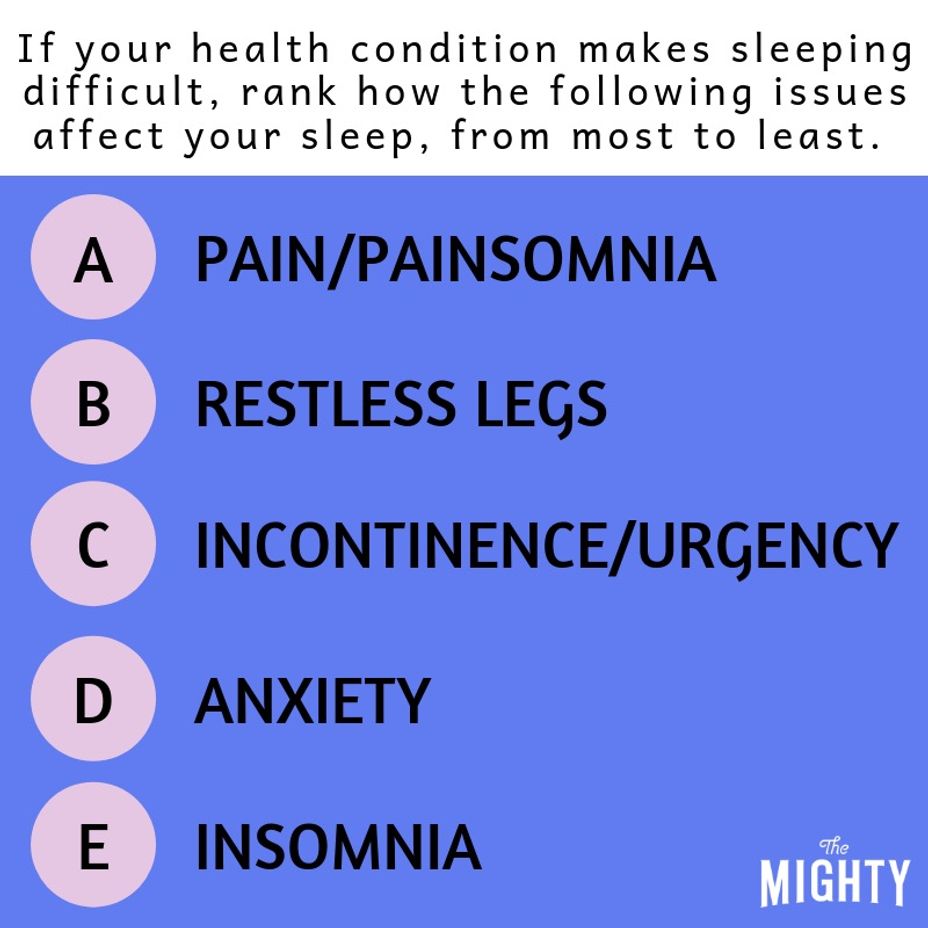
Does your health condition make sleeping difficult? #TipLine
Rank how the following issues affect your sleep, from most to least:
A: Pain/Painsomnia
B: Restless Legs
C: Incontinence/Urgency
D: Anxiety
E: Insomnia
And share your favorite sleeping tips with other Mighties in the comments below!

Tuesday, March 12, 2019

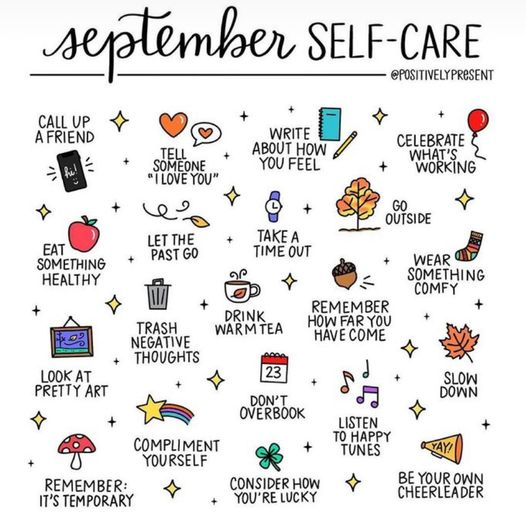
Self-Care Tips and Ideas

1. Have a good, long, body-shaking cry.
2. Call a trusted friend or family member and talk it out.
3. Call in sick. Take comp time if you can. Take a mental health day.
4. Say no to extra obligations, chores, or anything that pulls on your precious self-care time.
5. Book a session (or more!) with your therapist.
6. Dial down your expectations of yourself at this time. When you’re going through life’s tough times, I invite you to soften your expectations of yourself and others.
7. Tuck yourself into bed early with a good book and clean sheets.
8. Watch a comforting/silly/funny/lighthearted TV show or movie. (“Parks and Recreation,” anyone?)
9. Reread your favorite picture and chapter books from childhood.
10. Ask for some love and tenderness from your friends on social media. Let them comment on your post and remind you that you’re loved.
12. Watch Youtube videos of Ellen DeGeneres and the adorable kids she has on her show.
14. Ask for help. From whoever you need it – your boss, your doctor, your partner, your therapist, your mom. Let people know you need some help.
15. Wrap yourself up in a cozy fleece blanket and sip a cup of hot tea.
16. Breathe. Deeply. Slowly. Four counts in. Six counts out.
17. Hydrate. Have you had enough water today?
18. Eat. Have you eaten something healthy and nourishing today?
19. Sleep. Have you slept 7-9 hours? Is it time for some rest?
20. Shower. Then dry your hair and put on clothes that make you feel good.
21. Go outside and be in the sunshine.
22. Move your body gently in ways that feel good. Maybe aim for 30 minutes. Or 10 if 30 feels like too much.
23. Read a story (or stories) of people who overcame adversity or maybe dealt with mental illness, too. (I personally admire JK Rowling’s story.)
24. Go to a 12-Step meeting. Or any group meeting where support is offered. Check out church listings, hospital listings, school listings for examples.
25. If you suspect something may be physiologically off with you, go see your doctor and/or psychiatrist and talk to them. Medication might help you at this time and they can assist you in assessing this.
26. Take a long, hot bath, light a candle and pamper yourself.
28. Cuddle someone or something. Your partner. A pillow. Your friend’s dog.
29. Read past emails/postcards/letters etc. from friends and family reminding you of happier times.
30. Knit. Sculpt. Bake. Engage your hands.
31. Exhaust yourself physically – running, yoga, swimming, whatever helps you feel fatigued.
32. Write it out. Free form in a journal or a Google doc. Get it all out and vent.
33. Create a plan if you’re feeling overwhelmed. List out what you need to do next to tackle and address whatever you’re facing. Chunk it down into manageable and understandable pieces.
34. Remember: You only have to get through the next five minutes. Then the next five. And so on.
35. Take five minutes to meditate.
36. Write out a list of 25 Reasons Why You’ll Be OK.
37. Write out a list of 25 Examples of Things You’ve Overcome or Accomplished.
38. Write out a list of 25 Reasons Why You’re a Good, Lovable Person.
39. Write out a list of 25 Things That Make Your Life Beautiful.
40. Sniff some scents that bring you joy or remind you of happier times.
41. Ask for support from friends and family via text if voice-to-voice contact feels like too much. Ask them to check in with you via text daily/weekly. Whatever you need.
42. Lay down on the ground. Let the earth/floor hold you. You don’t have to hold it all on your own.
43. Clean up a corner of a room of your house. Sometimes tidying up can help calm our minds.
44. Ask yourself: What’s my next most immediate priority? Do that. Then ask the question again.
45. Read some poetry. RumiHafizMary Oliver are all excellent.
46. Take a tech break. Delete or deactivate social media if it feels too triggering right now.
47. Or maybe get on tech. If you’ve been isolating maybe even interacting with friends and family online might feel good.
48. Go out in public and be around others. You don’t have to engage. But maybe go sit in a coffee shop or on a bench at a museum and soak up the humanity around you.
49. Or if you’re feeling too saturated with contact, go home. Cancel plans and tend to the introverted parts of yourself.
50. Ask friends and family to remind you that things will be OK and that what you’re feeling is temporary.

51. Put up some Christmas lights in your bedroom. They often make things more magical.
52. Spend a little money and treat yourself to some self-care and comfort. Maybe take a taxi versus the bus. Buy your lunch instead of forcing yourself to pack it. Buy some flowers that delight you.
53. Make art. Scribble with crayons. Splash some watercolors. Paint a rock. Whatever. Just create something.
54. Go wander around outside in your neighborhood and take a look at all the lovely houses and the way people decorate their gardens. Delight in the diversity of design.
55. Go visit or volunteer at your local animal rescue. Pet some animals.
56. Look at photos of people you love. Set them as the wallpaper of your phone or laptop.
57. Create and listen to a playlist of songs that remind you of happier times.
58. Read some spiritual literature.
59. Scream, pound pillows, tear up paper, shake your body to move the energy out.
60. Eat your favorite, most comforting foods.
62. Turn off the lights, sit down, stare into space and do absolutely nothing.
63. Pick one or two things that feel like progress and do them. Make your bed. Put away the dishes. Return an email.
64. Go to a church or spiritual community service. Sit among others and absorb any guidance or grace that feels good to you.
65. Allow yourself to fantasize about what you’re hoping or longing for. There are clues and energy in your reveries and daydreams that are worth paying attention to.
66. Watch Autonomous Sensory Meridian Response videos to help you calm down and fall asleep at night.
67. Listen to monks chantingsinging Tibetan bowls or nature sounds to help soothe you.
69. Revisit an old hobby. Even if it feels a little forced, try your hand at things you used to enjoy and see what comes up for you.
70. Go to the ocean. Soak up the negative ions.
71. Go to the mountains. Absorb the strength and security of them.
72. Go to the forest. Drink in the shelter, life and sacredness of the trees.
73. Put down the personal help books and pick up some good old fashioned fiction.
74. Remember: Your only job right now is to put one foot in front of the other.
75. Allow and feel and express your feelings – all of them! – safely and appropriately. Seek out help if you need support in this.
76. Listen to sad songs or watch sad movies if you need a good cry. (“Steel Magnolias, anyone?)
77. Dance around wildly to your favorite, most cheesy songs from your high school years.
78. Put your hands in dirt. If you have a garden, go garden. If you have some indoor plants, tend to them. If you don’t have plants or a garden, go outside. Go to a local nursery and touch and smell all the gorgeous plants.
79. If you want to stay in bed all day watching Netflix, do it. Indulge.
80. Watch or listen to some comedy shows or goofy podcasts.
81. Look for and Google up examples of people who have gone through and made it through what you’re currently facing. Seek out models of inspiration.
82. Get expert help with whatever you need. Whether that’s through therapy, psychiatry, a lawyer, clergy, let those trained to support you do it.
83. Educate yourself about what you’re going through. Learn about what you’re facing, what you can expect to feel, and how you can support yourself in this place.
84. Establish a routine and stick to it. Routines can bring so much comfort and grounding in times of life that feel chaotic or out of control.
85. Do some hardcore nesting and make your home or bedroom as  cozy and beautiful and comforting as possible.
86. Get up early and watch a sunrise.
87. Go outside and set up a chair and watch the sunset.
88. Make your own list of self-soothing activities that engage all five of your senses.
89. Develop a supportive morning ritual for yourself.
90. Develop a relaxing evening ritual for yourself.
91. Join a support group for people who are going through what you’re going through. Check out the listings at local hospitals, libraries, churches, and universities to see what’s out there.
92. Volunteer at a local shelter or hospital or nursing home. Practice being of service to others who may also be going through a tough time.
93. Accompany a friend or family member to something. Even if it’s just keeping them company while they run errands, sometimes this kind of contact can feel like good self-care.
94. Take your dog for a walk. Or borrow a friend’s dog and take them for a walk.
97. Do something spontaneous. Walk or drive a different way to work. Order something new off the menu.Listen to a Spotify playlist of new songs.
98. Work with your doctor, naturopath or nutritionist to develop a physical exercise plan and food plan that will be supportive to whatever you’re facing right now.
99. Pray. Meditate. Write a letter to God/The Universe/Source/Your Higher Self, whatever you believe in.
100. As much as you can, please try and trust the process.
101. Finally, please remember, what you’re going through right now is temporary. It may not feel like that from inside the tough time you’re in, but this too shall pass and you will feel different again someday. If you can’t have faith in that, let me hold the hope for you.